


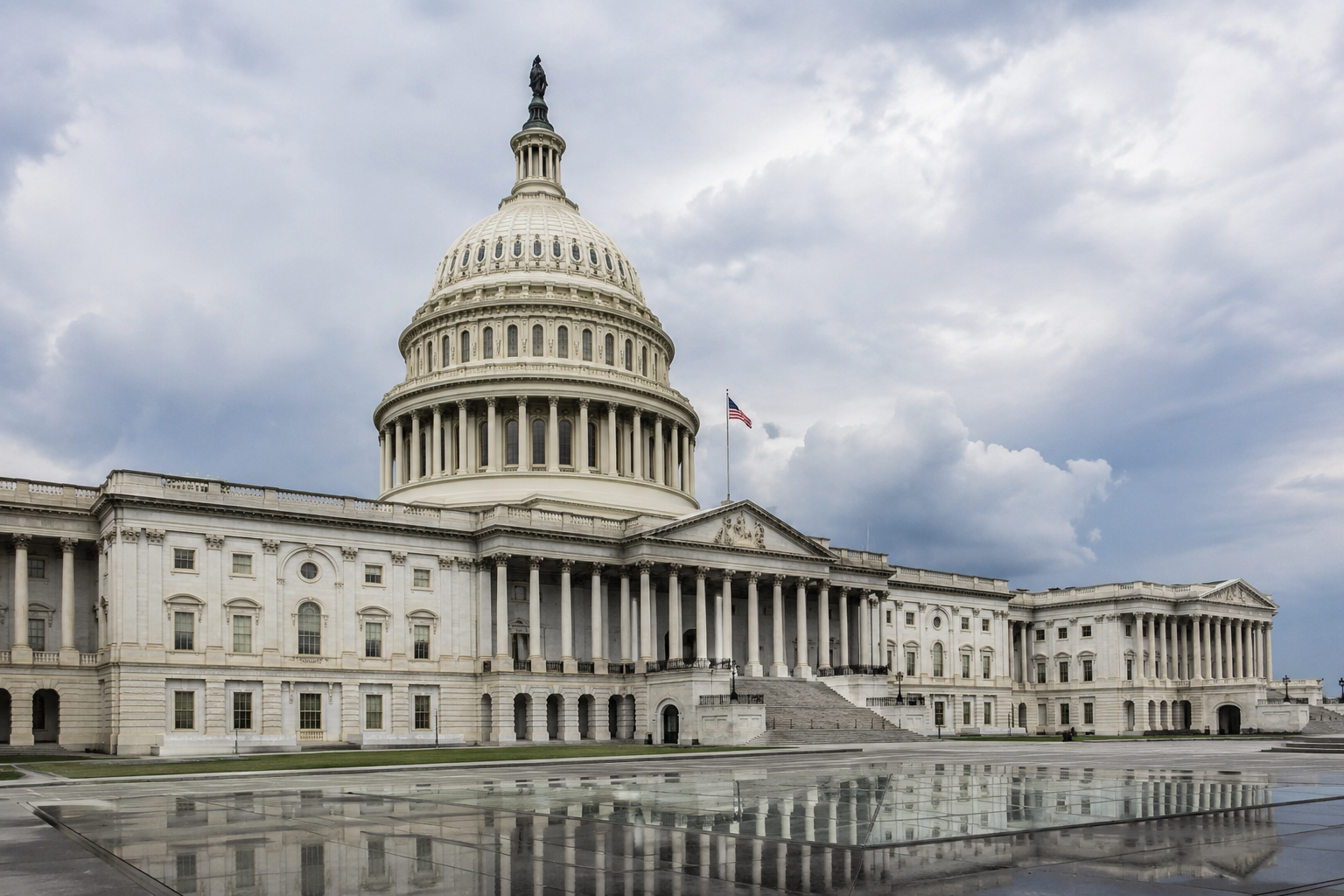
The U.S. has the productive capacity to house, feed, treat, and educate everyone in it. The shortage is not in resources but in the institutions designed to deliver them — and the missing institutions are missing by choice, not by necessity.
Every month, the Social Security Administration deposits or mails approximately seventy million benefit payments to retirees, disabled workers, and surviving family members across the United States. The agency operates with administrative costs of roughly half a percent of the benefits paid — a figure that has held, with minor variation, since the 1980s. The benefits arrive on schedule. The recipients do not have to apply for them each month, prove their eligibility annually, navigate a private intermediary, or argue with a claims adjuster. The relationship between the citizen and the public capacity is direct.
This is not the most exciting fact about American government. It is something more useful. It is a working example of an institutional category that the United States has built well in some sectors and badly in others — the category we will call, for the purposes of this article, an access institution. An access institution is the structural pattern by which a public entity stands between a productive capacity and a household need, eliminating the rent-extracting intermediaries that would otherwise gate access to the capacity. Social Security is one. Traditional Medicare is one. The Rural Electrification Administration was one. The land-grant university system is one. The U.S. Postal Service, in its constitutional form, is one. The Veterans Health Administration is one. The Federal Reserve, in its lender-of-last-resort function for the financial sector, is one — though the asymmetry of who counts as a household and who counts as a financial institution in U.S. economic policy is itself one of the questions this publication exists to investigate.
Most U.S. economic discourse asks whether the country has enough resources. The actual binding question, in most sectors, is different: whether the institutions exist to deliver the resources to the people who need them. The capacity-access gap is real, persistent, measurable, and — most importantly — institutional rather than productive in origin.
Begin with the ontological question this piece turns on: what kind of thing is an access institution? It is a public structure that converts a productive capacity into household-level provision through a direct administrative relationship. The features that recur across well-functioning examples are five.
First, universal or near-universal eligibility. Social Security covers all who paid into it through their working lives. Medicare covers all who reach 65, plus qualifying disabled workers. The Postal Service serves every U.S. address. The land-grant universities admit on academic terms. Universal eligibility eliminates the categorical gatekeeping that turns benefits into bureaucratic obstacle courses. Means-tested programs in the U.S. — SNAP, TANF, WIC, Medicaid — spend a substantial fraction of their administrative budgets on eligibility verification and recertification. Universal programs do not.
Second, public administration. The agency that runs the program also delivers the benefit. The Social Security Administration, not a contracted intermediary, processes applications and issues payments. Traditional Medicare, not a private insurer, pays providers directly. The Rural Electrification Administration capitalized cooperatives and let them deliver. The model is direct relationship; the alternative is the contracting-out architecture that has produced the Medicare Advantage industry, the SNAP EBT processing oligopoly, the tax-prep industry, and the federal student loan servicing industry, each of which extracts a margin between the public capacity and the household.
Third, standardized terms. The same product or service at the same price for everyone in the eligibility class. Social Security uses a single benefit formula. The Postal Service charges the same first-class rate to every address. Medicare uses a single fee schedule. Standardization eliminates the negotiation costs, the differential pricing, and the information asymmetry (Family 5) that allow well-resourced households to extract better terms than less-resourced ones.
Fourth, public financing. The institution is funded through the tax base, through dedicated payroll contributions, or through general revenue. User fees, where present, are kept below the threshold at which they would create access barriers. The contrast is the U.S. private healthcare system, in which user fees — deductibles, copayments, out-of-network charges, surprise billing — routinely produce access denial even among the insured.
Fifth, anti-extraction architecture. No profit margin is extracted between the capacity and the access. The capacity — medical providers, housing units, electricity, postal carriers — is paid; the recipient receives; the institution administers. The for-profit intermediation that characterizes most U.S. social provision — insurance companies, voucher administrators, charter management organizations, private prison operators, contracted-out social services — is structurally absent.
These five features are not abstract design principles. They are the operating signatures of institutions that have, in measurable ways, closed the capacity-access gap in their domains. They are also the features that the institutional apparatus arrayed against new access institutions has spent forty years working to prevent any new program from incorporating.
The mechanisms that prevent the construction of access institutions, or that hollow them out once built, are the mechanisms this publication has been investigating sector by sector. Administrative choking (Family 5) is the conversion of an in-principle entitlement into a set of bureaucratic obstacles that defeat access in practice; the U.S. SNAP program reaches roughly eighty percent of its eligible population, and the gap is substantially explained by the application complexity, the recertification burden, and the documentary requirements the program imposes. Capture-by-complexity (Family 5) is the design of programs whose terms cannot be navigated without a professional intermediary, which then becomes a permanent extraction point; the U.S. higher education financial aid system, the Medicare Advantage enrollment system, and the federal tax filing system are operating examples.
Crisis privatization (Family 6) is the use of public emergency to transfer public capacity to private operators on terms favorable to the operators; the New Orleans school system after Katrina, the Puerto Rico electric grid after Maria, and a substantial share of post-2008 mortgage servicing followed this pattern. Investment capture (Family 6) is the redirection of public investment to private vehicles that retain the upside; the contracting-out of federal IT modernization, the public-private partnership architecture of much U.S. infrastructure spending, and the Inflation Reduction Act’s reliance on tax credits administered through the private sector each include elements of this mechanism. Possibility closure (Family 7), as the companion piece in this issue documents, rules out the construction of new access institutions on the framing that they cannot be afforded.
These mechanisms are the family signature of access denial: a Family 5 + Family 6 + Family 7 pairing in which administrative gatekeeping, public-capacity transfer to private operators, and narrative defense of the resulting arrangement reinforce one another. They are what prevents the United States from doing in housing, in healthcare for the under-65 population, in childcare, in eldercare, in transit, and in higher education what it has demonstrated, in other domains, it knows how to do.
The beneficiaries of well-functioning access institutions are the households who receive the provision and the public economy that operates more productively because the underlying needs are met. The Social Security retirement program lifts approximately twenty-two million Americans above the poverty line each year, according to the Center on Budget and Policy Priorities’ analysis of Census data. Without it, the U.S. elderly poverty rate would be approximately thirty-eight percent rather than the roughly ten percent it currently is. The program is, in any meaningful sense, the largest anti-poverty institution the United States operates. It works because it was designed to work.
Traditional Medicare’s administrative cost ratio of approximately two percent compares to the U.S. private health insurance industry’s ratio of approximately twelve to fifteen percent, depending on the segment. The Affordable Care Act’s Medical Loss Ratio rule, which caps non-medical insurance spending at fifteen to twenty percent of premiums, was a partial corrective; it did not eliminate the structural margin. The administrative-cost differential, applied to the trillion-plus dollars annually flowing through U.S. health insurance, represents on the order of one hundred billion dollars a year in extraction that traditional Medicare’s design avoids. The savings are not theoretical. They are observed, year after year, in the comparative cost data published by the Centers for Medicare and Medicaid Services and by the National Health Expenditure Accounts.
The Rural Electrification Administration, established in 1935, brought electric service to U.S. farms whose population had been only ten percent electrified in 1934. By 1953 the figure was over ninety percent. The mechanism was the capitalization of rural electric cooperatives, owned by the customers they served, and the provision of low-interest federal loans for the necessary line-extension and generation capacity. The program transferred technical capacity that already existed in urban areas to rural areas through an institutional design that the private utility industry had refused to build. The Tennessee Valley Authority, established in 1933, did the same thing for an entire river basin
The burden of the institutions’ absence falls on households whose needs do not align with the markets that have organized themselves around private provision. It falls on the roughly twenty-five million Americans without health insurance and the substantially larger number with insurance that does not adequately protect them from cost. It falls on the roughly one million parents who report leaving the workforce because they cannot find or afford child care. It falls on the four-to-seven-million-household housing deficit. It falls on the public workforce that operates the patchwork of partial provision that substitutes for an access institution — the eligibility caseworkers, the voucher administrators, the navigators — whose labor is largely consumed by the administrative architecture rather than by the underlying service.
And the burden falls, again, on the political imagination. The U.S. discourse about social provision has been organized for forty years around the premise that public administration is inefficient, that government cannot do anything well, that markets allocate better than agencies. The premise is held in place by a constant feedback loop in which existing access institutions are starved of operating capacity — the IRS, Social Security’s customer-service capacity, the Veterans Health Administration’s pre-2014 wait times — the resulting service degradation is presented as evidence of the premise, and proposals to expand the access-institution category are dismissed on its strength. The premise is not empirically supported. It is institutionally sustained.
The phrase doing the most work in defending the absence of new access institutions is the government cannot do anything well. Variants — the private sector is more efficient, we tried that and it failed, the bureaucracy would be unmanageable, people would game the system — perform the same function. They are legitimacy shielding (Family 7): the conversion of selected institutional failures into a generalized claim about the limits of public capacity. The empirical record cuts the other way. The U.S. access institutions that have been allowed to operate without sustained sabotage — Social Security, traditional Medicare, the federal court system, the National Weather Service, the Library of Congress, the Postal Service through most of its history — outperform their private counterparts on cost, on reach, and on durability. The institutions that have been allowed to fail have, in most cases, been deliberately starved of the operating budget required to function. This is not a finding about public capacity. It is a finding about who funds the analysis of public capacity, and what the funding is structured to demonstrate.
The counter-mechanism the dominant frame rules out is universal entitlement — the construction of access institutions that deliver provision directly, without categorical gatekeeping, in sectors where private intermediation has failed. Adjacent counters include public risk pools for healthcare, sectoral and cooperative ownership for housing, public capacity rebuilding in agencies that have been hollowed out, and disintermediation by mandate for sectors in which a private intermediary has captured the relationship between capacity and access.
The first precedent is American and old. The Social Security Act of 1935, in its retirement-pension provision, and the Old Age, Survivors, and Disability Insurance program it became, has operated continuously for ninety years. It has been amended repeatedly but has never been substantively privatized despite multiple attempts — the George W. Bush 2005 privatization push being the most recent serious one. Its administrative cost ratio of approximately half a percent of benefits paid is among the lowest of any large-scale social program operated anywhere in the world. The actuarial trustees report annually on its long-term financing, which is constrained by demographic and tax-base factors but is not in any meaningful sense unsolvable. The program is the foundational American example of an access institution working at scale.
The second is American and somewhat newer. Medicare, established by the 1965 Social Security Amendments, covers approximately sixty-five million Americans who would otherwise face an insurance market that, for older and chronically ill patients, has historically been unable to provide affordable coverage. Traditional Medicare’s two-percent administrative cost ratio is the institutional baseline against which every U.S. private insurance product should be measured and almost never is. The Medicare Advantage program, introduced in 1997 and substantially expanded since, reintroduced private intermediation into the model and now covers more than half of all Medicare beneficiaries; the comparison between the two programs’ performance — on cost, on quality of care, on patient satisfaction — is one of the more important ongoing natural experiments in U.S. social policy, and one this publication will return to.
The third is foreign and recent. Singapore’s Housing and Development Board, established in 1960, has built and continues to operate a public housing system in which approximately eighty percent of Singaporean residents live. The flats are constructed by HDB, sold or leased through a public auction system, financed in substantial part through individuals’ Central Provident Fund accounts (a publicly administered retirement and social insurance system), and maintained through public administration. Singapore is not a left-political society; the HDB system was built by a center-right government as a matter of national policy. The institution has operated continuously for sixty-five years across multiple political administrations. The capacity to produce housing existed; the institution that turned it into access was built; the access exists.
The fourth is American and continuous. The U.S. Postal Service has, since its constitutional founding, operated under a universal-service obligation: every U.S. address is reachable for a standard rate that does not vary by destination’s profitability. The institution has been under sustained attack for two decades, with the 2006 Postal Accountability and Enhancement Act’s pension-prefunding requirements producing the financial stress that has been used to justify subsequent service cuts. But the institution itself works, and its operational logic — universal service at standardized terms financed through a combination of postage revenue and historical capital subsidy — is the operating model of every access institution this article has described. The Postal Service is what UPS and FedEx are not, and the difference is not productive capacity but institutional design.
The reframing is this: the binding constraint on U.S. social provision is not productive capacity. It is institutional architecture. The country has the housing-construction capacity, the medical-provider capacity, the educational capacity, the energy-generation capacity, and the agricultural capacity to provide for everyone in it. What it has not, in many sectors, is the institution that stands between the capacity and the household and converts one into the other on terms that everyone can meet. The institutions that perform this conversion well — Social Security, traditional Medicare, the Postal Service in its functional form, the GI Bill in its operational years, the Rural Electrification Administration before its 1994 dissolution, the land-grant university system before the era of cost-shifting to students — are American inventions. The country knows how to build them. It has chosen, in many sectors, not to.
The question of why is the subject of every other Infinite Economics piece. It involves the political organization of the constituencies that would benefit, the political organization of the intermediaries who would be displaced, the ontological framing that treats public administration as inherently inefficient, and the institutional apparatus that converts that framing into the default policy position. None of these are immovable. The Social Security Act passed in 1935. The Medicare Act passed in 1965. The Civil Rights Act passed in 1964. The Endangered Species Act passed in 1973. The Affordable Care Act passed in 2010. The Inflation Reduction Act passed in 2022. American institutional construction has happened. It has happened recently. It can happen again.
The question of which institutions to build is a question of which capacities are most urgently failing to translate into access. The housing system is one. The under-65 healthcare system is another. The childcare system is a third. The eldercare system is a fourth. The transit system is a fifth. The list is finite. The construction is feasible. The mechanism is known. What is missing is the political coalition that recognizes itself as the constituency for whom these institutions would be built. Building that coalition is not the work of journalism. But naming the institutions that would serve it, documenting the cases where similar institutions already work, and identifying the mechanisms by which the construction has been blocked — that is the work of journalism. It is the work this publication is for.
Infinite Economics covers the political economy of public-provision architecture and the institutional mechanisms that determine whether productive capacity reaches the households it could serve. This piece is part of our ongoing investigation of access institutions, public administration, and the design of programs that close the capacity-access gap.


Leave a comment